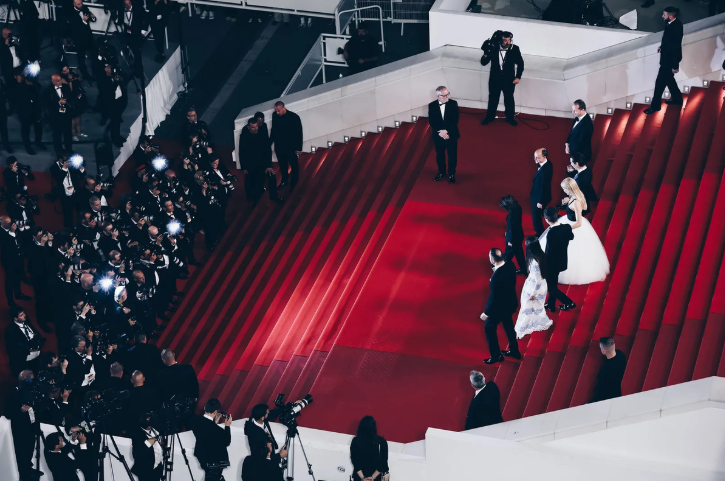
Romanian director Cristian Mungiu's Norwegian-set political drama tops a strong showing for European cinema at the 79th festival. Six EU-supported films by the Creative Europe MEDIA programme earned major honours at the 79th Cannes Film Festival, led by Cristian Mungiu’s Fjörd winning the Palme d'Or. The wins highlighted European cinema amid a politically charged atmosphere for the Israeli genocide in Gaza and Russia's invasion of Ukraine.
By Creatives Unite Newsroom
Six films backed by European Union funding were among the prize-winners at the 79th Cannes Film Festival, which closed on Saturday 23 May, with the coveted Palme d'Or going to Fjörd, directed by Cristian Mungiu and supported through EU development funding.
The film, a political drama set in Norway exploring themes of social polarisation, follows a community of Romanian Evangelicals whose children are removed by social services following allegations of corporal punishment. It is the latest work from Mungiu, the Romanian director best known for 4 Months, 3 Weeks and 2 Days.
Two further films backed by the EU's Creative Europe MEDIA programme claimed prizes in the main competition. Das Geträumte Abenteuer (The Dreamed Adventure), directed by German filmmaker Valeska Grisebach and supported through co-development funding, received the Jury Prize. Emmanuel Marre's Notre Salut (A Man of His Time), a MEDIA-supported production, took the Best Screenplay award.
The Best Actor prize went to Emmanuel Macchia and Valentin Campagne, the two lead performers in Coward, directed by Belgian director Lukas Dhont. The film was supported through the EU's film distribution scheme.
In the Un Certain Regard section, Elephants in the Fog, directed by Abinash Bikram Shah and supported through the MEDIA 360° scheme, won the Jury Prize. Valentina Maurel's Siempre soy tu animal materno (Forever Your Maternal Animal), also backed by MEDIA, earned the Best Actresses prize for its three lead performers.
Nineteen EU-funded films were nominated at this year's festival in total, with the Creative Europe MEDIA programme providing combined support of €1.17 million for the works and their distribution. The programme has backed European audiovisual content for 35 years.
Henna Virkkunen, the European Commission's Executive Vice-President for Technological Sovereignty, Security and Democracy, said: "Congratulations to all European productions in the spotlight of this year's Cannes Film Festival. The work of European filmmakers showcases creativity, collaboration and talent."
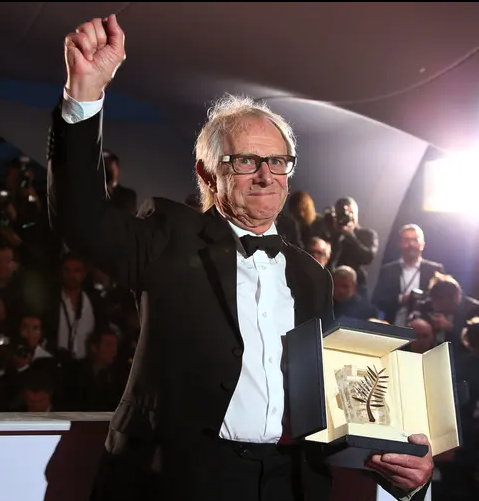 The awards ceremony was not the only moment that drew attention. The festival had been marked throughout by pressure on filmmakers and jurors to speak publicly about the wars in Gaza and Ukraine. Ken Loach, appearing at the festival's open-air Cinéma de la Plage screening on 20 May to present a new film addressing the rise of fascism in Europe, criticised fellow director Wim Wenders for a statement made at the Berlinale in February in which Wenders suggested filmmakers should avoid politics. "Politics is fundamentally important to filmmaking," Loach said. "Filmmakers should act as witnesses to our era."
Jury member Paul Laverty, the Scottish screenwriter and longtime collaborator of Ken Loach, used a press conference to condemn Hollywood for what he described as the blacklisting of actors — including Susan Sarandon, Javier Bardem and Mark Ruffalo — who had voiced opposition to the war in Gaza. "Shame on Hollywood," he said.
Cate Blanchett, Bardem and Spanish director Pedro Almodóvar were among those who spoke publicly about Palestine. Blanchett remarked that film festivals have become "the only places where one can talk about wars, conflicts and genocides."
Russian director Andrey Zvyagintsev, whose film Minotaur — set against the backdrop of the war in Ukraine — won the Grand Prix, used his acceptance speech to address President Putin directly. He described the conflict as a "meat grinder," called on Putin to "put a stop to this carnage", and said the whole world was waiting for the killing to end. He expressed personal shame at Russia's actions.
Cannes authorities banned all protests along the Croisette for the duration of the eleven-day festival, including the wearing of pins in support of either Palestinian solidarity or Israeli hostages.