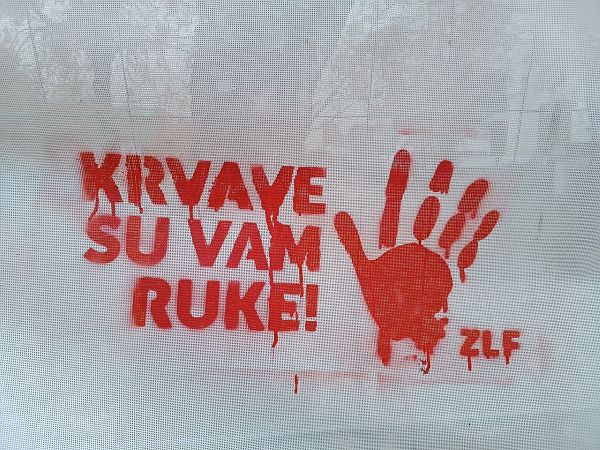


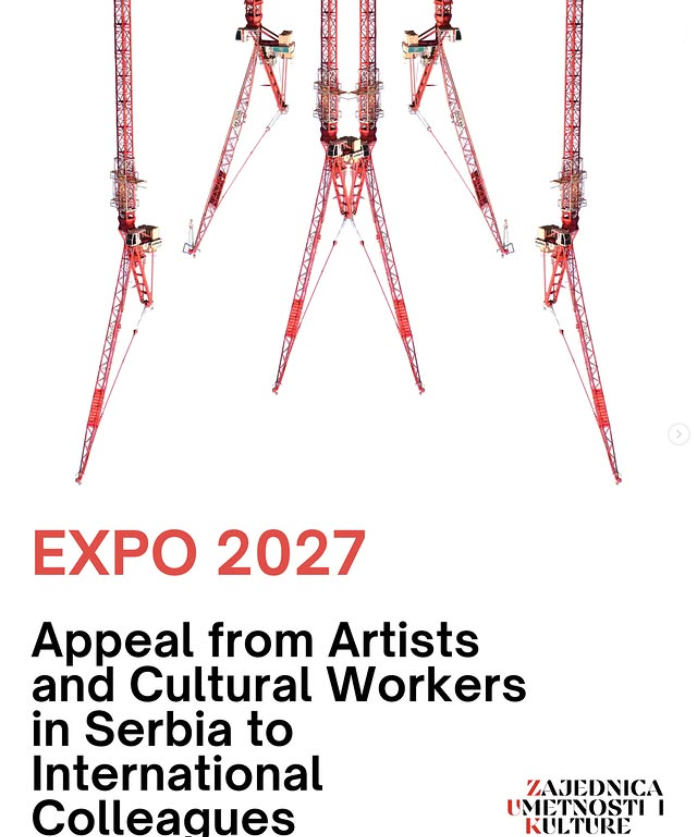
An open letter from Serbian artists and scholars urges foreign colleagues to shun next year's world exposition in Belgrade, warning that the event is being used by the government of President Aleksandar Vučić to launder its image while systematically dismantling artistic freedom at home.
By Matthaios TsimitakisThe appeal — issued by an informal collective calling itself the Community of Arts and Culture (Zajednica umetnosti i kulture) and circulated internationally through the European performing arts network IETM — represents the most direct challenge yet by Serbia's cultural community to the government's handling of the arts since a political crisis erupted in November 2024. The full text can be read at the IETM website or downloaded here (PDF)
The signatories describe Expo 2027 not as an independent cultural event but as "the culmination of its model of governance: marked by non-transparency, corruption, the bypassing of legal procedures, the privatisation of public interest, and the instrumentalisation of culture". They warn that a disproportionate share of public funds has been redirected toward the project while the majority of local artists are left without access to basic support, and they raise concerns about "legality, environmental impact, and the introduction of exceptional legal measures that undermine existing judicial frameworks".
The appeal's official slogan — "Play for Humanity" — is cited with bitter irony. The document ends with the rallying cry: "One World, One Struggle!"
The immediate trigger for Serbia's unrest was the collapse of a canopy at a newly renovated railway station in Novi Sad on 1 November 2024, which killed 16 people. The disaster unleashed what became the largest student movement in the country's history, with mass protests demanding accountability and exposing systemic corruption, media control, and the abuse of public institutions.
From the outset, cultural workers stood in solidarity with the students. During 2025, many faced serious consequences: loss of funding, restricted access to public spaces and media, and professional retaliation.
The collective maintains what it calls a "Chronicle of Repression", documenting cases of pressure against cultural workers, available at their Linktree profile.
The scope of the government's response to dissent within the cultural sector was brought to Brussels last month. Serbia's opposition Democratic Party wrote to representatives of the Socialists and Democrats group in the European Parliament's Committee on Culture and Education on 19 May 2026, warning of "increasingly intense repression against professionals, institutions, and organisations in Serbia's cultural sector."
The party described pressure being exerted through "budget cuts and the reduction of funding, the cancellation of open competitions, the appointment of political loyalists to leadership positions, changes to internal regulations aimed at disciplining employees, media smear campaigns and threats against organisations and individuals expressing solidarity with the protests."
The problems predate the current crisis. Reduced budgets, unequal and politically controlled funding, nepotism, and institutional mismanagement have deepened further, leaving many artists and cultural workers in severe economic insecurity. Censorship, workplace harassment, dismissals, and public attacks against those who speak out have become widespread. Serbia's culture budget currently stands at just 0.67 per cent of total government spending — the lowest proportion in Europe, according to the Community of Arts and Culture.
Physical violence has accompanied the administrative squeeze. In a joint statement issued on 4 July 2025, Amnesty International and Civil Rights Defenders documented a widespread violent crackdown on largely peaceful student protesters in Belgrade and other major cities, which began on 28 June 2025 when the student movement called for early parliamentary elections.
The Community of Arts and Culture urges international colleagues to help amplify what is happening in Serbia, to speak out against growing threats to freedom, democracy, and citizens' rights, and — crucially — to "carefully inform themselves before accepting any form of collaboration or participation in EXPO 2027 or related programmes" and to hold their own governments accountable for decisions about participation in Belgrade.
The group emphasises that it remains open to collaboration and exchange with international partners and that "artists and cultural workers in Serbia need your presence and active support".
The Serbian government has not responded publicly to the appeal. President Vučić's administration, which has held power since 2012, has repeatedly denied that crackdowns on protesters amount to systematic repression, characterising unrest as politically motivated.