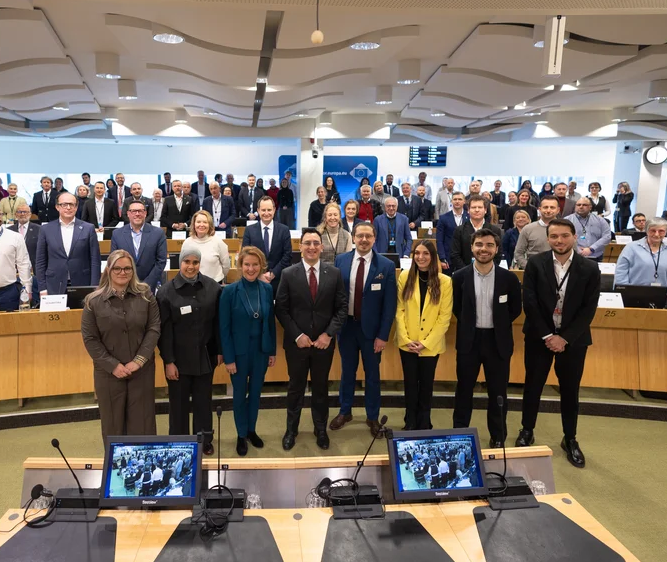



Young people's place in Europe's future took center stage at the commission for Social Policy, Education, Employment, Research and Culture (SEDEC) debate on Sunday, where local and regional leaders pressed for enhanced protections against online harms and greater investment in youth programs.
Glenn Micallef, the European Commissioner for Intergenerational Fairness, Youth, Culture, and Sport, met with youth representatives and regional officials to discuss cyberbullying, cultural policy, and youth mobility programs. The debate highlighted growing concerns about digital safety for minors and the need for sustained funding for Europe's flagship educational exchanges.
"Young people are shaping Europe's future every day—online, offline, and in their communities," Micallef said. "Our responsibility is to ensure they can do so safely, creatively, and with confidence."
Regional leaders called for stronger enforcement of existing online safety regulations and urged policymakers to consider the long-term impacts of current decisions on future generations. They emphasized that youth participation and cultural investment are essential drivers of social cohesion across the EU.
Erasmus+ expansion backed
The committee adopted a draft opinion supporting the continuation of Erasmus+, the EU's student exchange program, as part of negotiations over the bloc's 2028-34 budget. Roberto Pella, mayor of Valdengo in Italy and the opinion's rapporteur, described the program as "a cornerstone of our shared European identity."
The draft calls for universal access for EU students, a dedicated sports component, and full involvement of local and regional authorities in program delivery.
Digital protections for children
In a separate opinion, committee members demanded coordinated action across all levels of government to protect children online. The draft, prepared following a request from Cyprus's EU presidency, calls for stricter platform accountability, effective age verification systems, and clearer rules governing advertising and influencers targeting young audiences. However, it stops short of recommending blanket age-based bans.
Heike Raab, a state secretary in Germany's Rhineland-Palatinate government who authored the opinion, said, "Children and young people deserve to grow up in a digital environment that is safe, fair, and empowering."
The committee also backed AgoraEU, a proposed new program to support culture, media independence, and democratic participation, arguing that local authorities must be recognized as partners rather than merely recipients of EU funding.
All three draft opinions are scheduled for adoption at the Committee of the Regions plenary session in May, with the child wellbeing opinion due in March.
Image © European Union / Giedre Daugelaite