

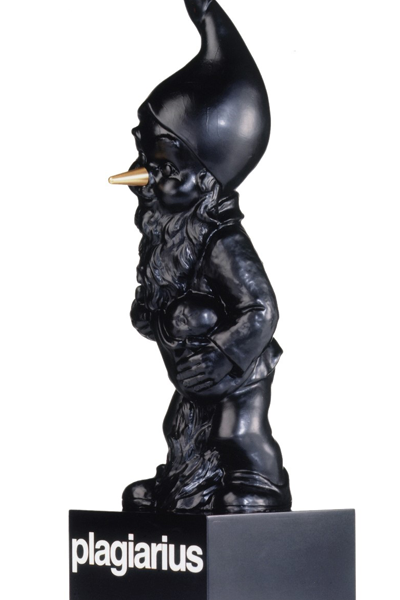
Since 1977, Aktion Plagiarius has been awarding the satirical “Plagiarius Award” to raise awareness of counterfeiting and its harmful effects on innovation and creativity. With its infamous trophy (a black dwarf with a golden nose) the initiative exposes copycats, encourages rights holders to defend their assets, and reminds industry and consumers of the value of genuine innovation.
From the archives
Our guest for this success story is from a fascinating and attention-grabbing initiative: Aktion Plagiarius. We had the opportunity to speak with Christine Lacroix, the Press and Public Relations Executive, about their “negative award” called the “Plagiarius” and its role in increasing awareness of counterfeit products.
The bad news, it is almost impossible to prevent someone from producing (optical) imitations. However, those affected can take measures that enable them to stop the manufacture and distribution and hold the imitators accountable.
Counterfeiting, also known as imitating or fake product marketing, has a significant negative impact on the success of businesses. How and why did you create the “Plagiarius” Award, and how do you see its role in addressing the issue of counterfeiting?
In 1977, the industrial designer Rido Busse, whom was affected by plagiarism and experienced counterfeiting issues with his own original products, decided to create the high-profile negative award "Plagiarius" to shake up industry, politics and consumers and raise awareness of the problem. Since then, manufacturers and traders of particularly brazen imitations have been awarded annually with our "Plagiarius" award. The trophy is a black dwarf with a golden nose - as a symbol of the immense profits that unimaginative imitators literally make at the expense of creative people and entrepreneurs. Objectives of the Plagiarius campaign are (1) to raise public awareness of the unscrupulous business methods of product and brand pirates, (2) to encourage creative people to protect their IP by means of IP rights and to call brazen imitators to account, (3) to strengthen respect and appreciation for creative achievements, (4) to act as a mouthpiece for industry and the creative sector, and (5) to protect consumers from inferior counterfeits and to encourage them to rethink. Of course, the "Plagiarius" award says nothing about whether the counterfeit product is legally permitted or illegal. We cannot dispense justice - but with our Plagiarius Museum in Solingen and thanks to the large presence in the media, we can raise awareness of injustice, i.e. the negative impacts of counterfeiting.
Have you received any feedback from the “winners” of the Plagiarius Award? Do you believe your efforts with this award have successfully deterred infringers' activities or prompted them to change their practices?
Within the scope of the Plagiarius competition, we inform the alleged plagiarists about their nomination and give them the opportunity to comment. Some do not respond at all, some vehemently deny that their product is a plagiarism and threaten legal action, usually without consequence. One of our great successes, however, is that every year some imitators seek an agreement with the original manufacturer out of fear of public disgrace and bad publicity. They then, for example, take remaining stocks of the counterfeits off the market, sign a cease-and-desist declaration and/or they disclose their suppliers. Such a quick and out-of-court settlement saves these companies expensive and protracted litigation. Irrespective of this, however, those affected should also take action themselves and not try to settle hopeless cases via Plagiarius. By participating in the competition, companies send an important signal to competitors that they will not accept infringing products. Thanks to the high media presence, our negative award definitely has a deterrent effect - unfortunately not on everyone - but we are happy for the creatives about every case of insight, rethinking and giving in.
Intellectual property (IP) rights play a crucial role in combating counterfeit products. What steps should right holders take when they identify an infringement, such as a fake product being exhibited at a fair?
As soon as a case of plagiarism becomes known, quick action is required. First of all, the current status should be analysed and, above all, evidence collected: Does the imitation violate IP rights, if so, which one(s)? Where does the imitator come from and in which countries are the imitations distributed? Is the infringer unknown or a competitor? How great is the damage estimated to be? Only then can those concerned decide on cost-conscious measures and call in experts to enforce claims. The friendly option would be an authorisation request. If the imitator turns out unreasonable, a warning letter from a lawyer combined with a cease-and-desist declaration makes sense. At trade fairs, customs can seize infringing goods from suppliers from third countries. If the matter is urgent, an injunction can be obtained through a bailiff. It is generally advisable to have a good overview of one's property rights and to have all important information and contacts at hand.
What is your opinion regarding the general level of IP awareness among creatives in the creative industries?
The topic is more present nowadays, both in the media and at universities, i.e. awareness of the need for industrial property rights is increasing. However, there is often a misunderstanding about copyright, for example, which applies to works of applied art - music, film, art, literature - but generally not to designed products. And the effectiveness of registered design protection is often underestimated. But this even makes sense for technical products - the principle of counterfeiters is usually "more illusion than reality". Industrial property rights are a rather dry topic, especially for creative people. However, it is always helpful to know your rights, obligations and options. Of course, this also includes the topics of advance research in IP databases and funding opportunities. Dealing with all this can save a lot of money and trouble. And here too, if you expect fair, respectful behaviour from others, you should also act according to this maxim yourself. Innovations do not arise from clumsy "copy-paste". Only genuine innovations ensure diversity and progress and thus deserve protection and appreciation.
What advice or strategies would you offer to companies and designers to safeguard their IP and prevent their products from being counterfeited?
The bad news, it is almost impossible to prevent someone from producing (optical) imitations. However, those affected can take measures that enable them to stop the manufacture and distribution and hold the imitators accountable. For the best possible defence against product and brand piracy, we recommend a holistic strategy consisting of legal, organisational and technical measures. This includes, as a basis for further measures, the early registration of industrial property rights - in all relevant markets. Without IP rights, copies may be brazening, but from a legal point of view they are legal in many cases, unless, for example, unfair competitive behaviour can be proven. With IP rights, those affected have the possibility to claim injunctive relief and damages as well as the right to information. Important strategic partners in the fight against plagiarism are also customs and providers of test seals and monitoring. Customs can remove infringing goods from circulation at the external borders. By using real-time seals with counterfeit-proof certificates, manufacturers can mark their authorised partners as such, which gives consumers security when buying online. And specialised service providers can use AI to scour the internet, detect plagiarism and have it deleted. Another good strategy is to convince customers of the original product, to bind them to your company and to reward them for giving clues to counterfeits. A professional IP strategy to protect company know-how as well as the regulation of access authorisation – physically and digitally – should be self-evident.
For more information, please check the website of Aktion Plagiarius here. This year’s (2023) Plagiarius Award “winners” can be seen here.
Key Takeaways