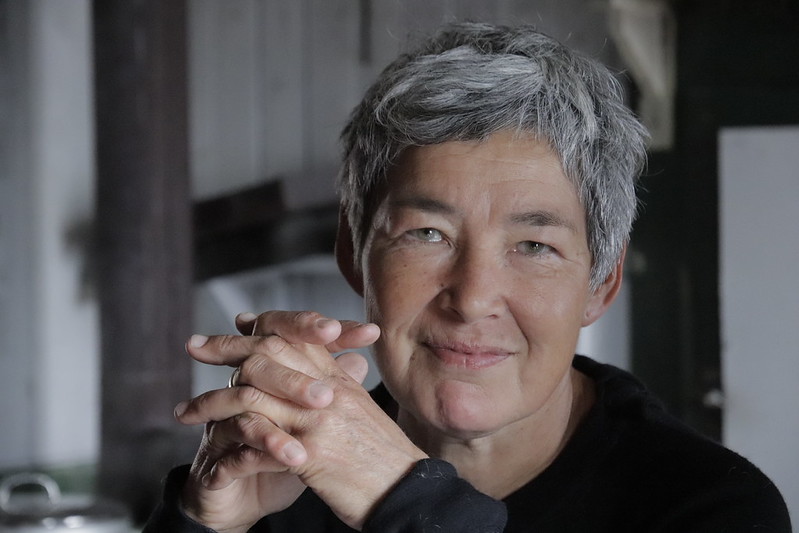



In light of the controversy surrounding Greenland, Europa Nostra conducted an interview with Inge Bisgaard, who has been awarded Europe's top heritage honour. Bisgaard champions Greenland's cultural legacy by preserving its architectural heritage and celebrating its unique blend of traditional Greenlandic and European building practices.
Inge Bisgaard, a museum curator at the Greenland National Museum and Archives, won the Grand Prix in the Heritage Champions category at the 2025 European Heritage Awards—the continent's highest cultural heritage honor.
The lifelong Greenlander has dedicated her career to preserving and documenting Greenland's architectural heritage, combining local knowledge with international expertise to become one of the region's foremost building conservation specialists.
Receiving the award in Brussels last October from European Commissioner for Culture Glenn Micallef was deeply meaningful for Bisgaard. "To receive such a prestigious award...filled me with deep gratefulness," she said to her interview with Europa Nostra, adding that her late parents "would certainly shed a few tears of joy."
She hopes the recognition will benefit her homeland: "The Grand Prix has attracted great attention to Greenlandic cultural heritage and Greenland."
Shaped by Two Cultures
Bisgaard describes growing up "in a time when the old Greenland and the new Greenland walked side by side," when individual building components were precious and carefully maintained.
"The Greenlandic part has taught me that everything has a soul and beauty is strengthened by getting to know its nature. The Danish part has taught me that knowledge opens up worlds," europanostra she explained.
Greenland's traditional architecture reflected its challenging environment. "The form of living consisted of one type of dwelling in the summer and another type of dwelling in the winter," europanostra Bisgaard noted, with buildings designed around sparse local materials.
European influence brought new building materials in the 18th century, creating a unique blend: "The European building customs were adapted to the Greenlandic conditions and today we can read the 'Greenlandic' in the way of furnishing and building."
A Connected Society
Bisgaard highlighted Greenland's strong social traditions, including the "kaffemik"—an open house celebration for important family events where "delicious traditional Greenlandic dishes are served where reindeer meat, lamb, shrimp, mattak (whale skin), salmon, halibut and many other dishes are put out for everyone to enjoy." europanostra
On Greenlandic resilience, she said: "Greenlanders have managed to survive in a part of the world where living conditions depend on a strong self-awareness of who we are."
The full interview is available at europanostra.org