


Employment of persons with disabilities and independent living are among the areas of limited progress despite the considerable efforts during the first half of the Strategy. Reviewing the Strategy, the Commission wants to hear your thoughts. Deadline: 6 February 2026.
By Creatives Unite Newsroom
The European Commission has opened a call for evidence and open public consultation on the Strategy for the rights of persons with disabilities 2021-2030 with a deadline for contribution by February 2026.
The aim of the consultation is to collect evidence on key areas requiring further EU action to advance the rights of persons with disabilities, which still face considerable barriers and have a higher risk of poverty and social exclusion, despite the progress made in the past decade.
Further input on enhancing the Strategy for the rights of persons with disabilities 2021-2030 is to be gathered through targeted stakeholder consultations with the authorities of EU countries, civil society organisations, social partners and other actors.
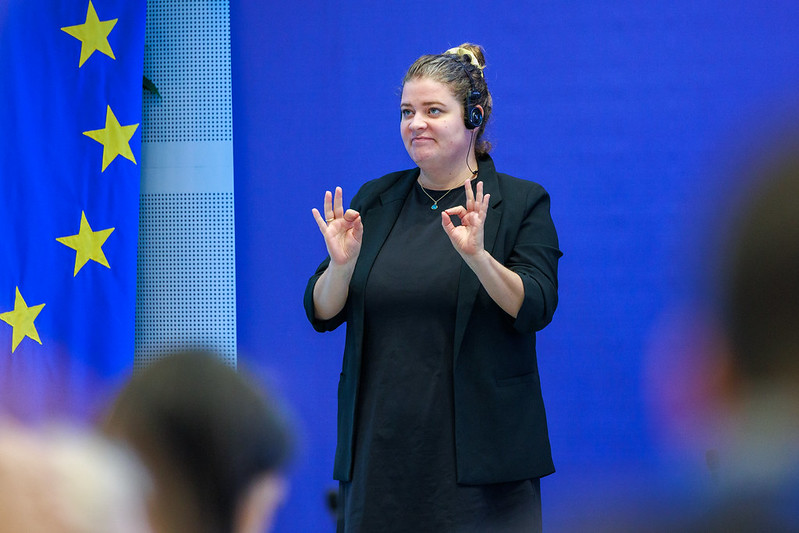
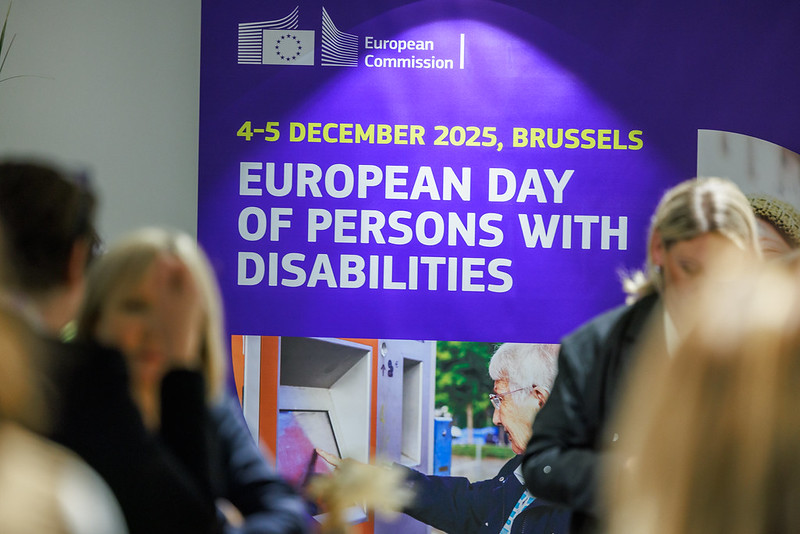
The flagship annual event European Day of Persons with Disabilities, took place on 4-5 December 2025, also offered the opportunity for a further exchange with the disability community.
Evidence and input already communicated by other EU institutions, civil society organisations and international bodies (UN Committee for the Rights of Persons with Disabilities) will be taken into consideration.
The input provided will be used to update the Commission’s Communication “Enhancing the strategy for the rights of persons with disabilities up to 2030“ planned for the second quarter 2026, as announced in the Commission Work Programme 2026.
Why this is important
The Strategy builds on the results of the previous European Disability Strategy 2010-2020, which paved the way to a barrier-free Europe and to empower persons with disabilities so they can enjoy their rights and participate fully in society and economy.
Since the Strategy’s adoption in 2021, the policy context has changed and new societal challenges have also emerged, imposing the need for an update and a shift towards synergies with more recent EU policy initiatives.
For example, making the EU more competitive, by lowering costs for businesses, citizens and consumers, increasing productivity, facilitating connectivity and supporting economic growth, is emerging as a key priority. The use of Artificial Intelligence is another area of increased interest, given its potential, but also its attendant risks of discriminatory treatment.
Despite progress made in the past decade, persons with disabilities still face considerable barriers and have a higher risk of poverty and social exclusion. In some areas, such as the employment of persons with disabilities and independent living, evidence points to limited progress despite the considerable efforts that were made to improve the situation during the first half of the Strategy.
An open invitation to contribute
This consultation is addressed to the public and a wide range of stakeholders, including:
• national authorities responsible for disability policies, equality and non-discrimination
• equality bodies and the European Network of Equality Bodies (Equinet)
• civil society organisations active in ensuring disability rights are respected
• relevant EU agencies, such as the Agency for Fundamental Rights (FRA) and Eurofound
• other bodies such as the European Agency for Special Needs and Inclusive Education (EASNIE)
• employers, business organisations and trade unions • academics and experts in the area of disability
• individuals with an interest in disability
• international organisations
• other public and private stakeholders with an interest in specific aspects of disability (e.g. national statistical institutes, the healthcare sector, public employment services, housing stakeholders, standardisation bodies, etc).
Background
The Strategy for the rights of persons with disabilities 2021-2030 includes seven flagship initiatives, 57 Commission actions and 23 calls for EU countries to act. It promotes disability mainstreaming in the Commission’s activities as well as in funding programmes under direct and shared management, and adopts a consultative approach to the development of the flagship initiatives, namely through the Disability Platform dedicated preparatory sub-groups.
Find more and have your say here
Images (c) Ambiance by DG Just.