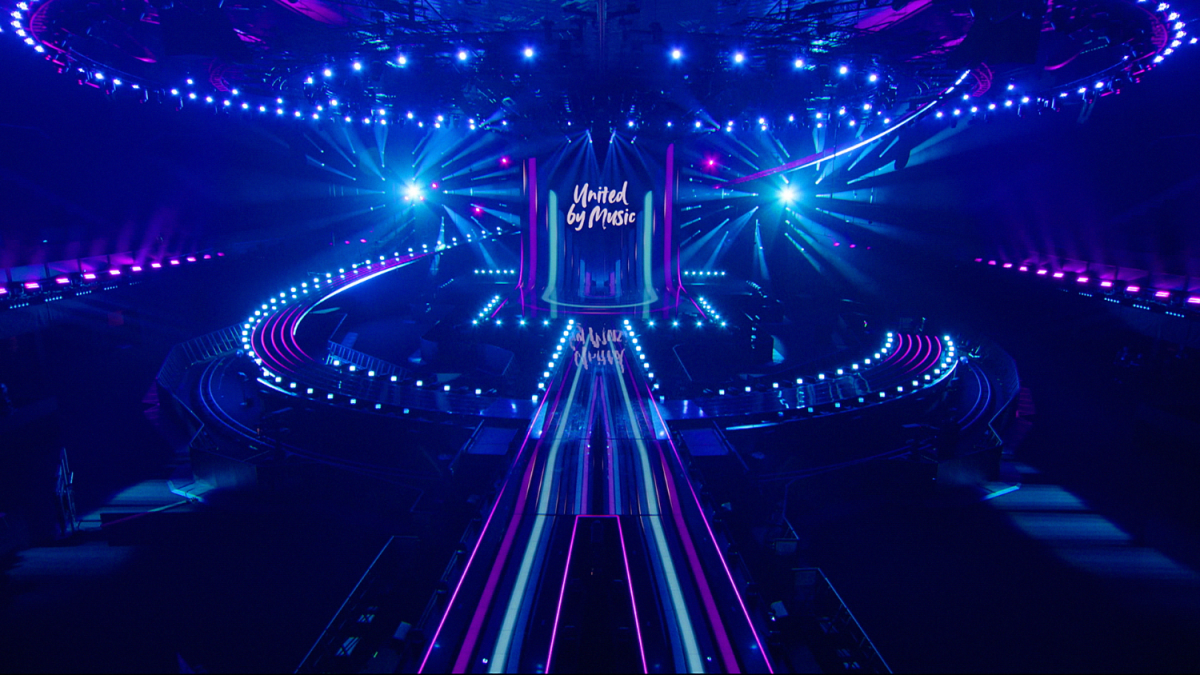

The 70th Eurovision Song Contest opened in Vienna this week under the gravest cloud of political controversy in its history, as five countries refused to participate, and Israel's entry was accompanied on air by an audible voice from within the arena shouting, "Stop, stop the genocide", during Tuesday's first semi-final.
By Creatives Unite Newsroom
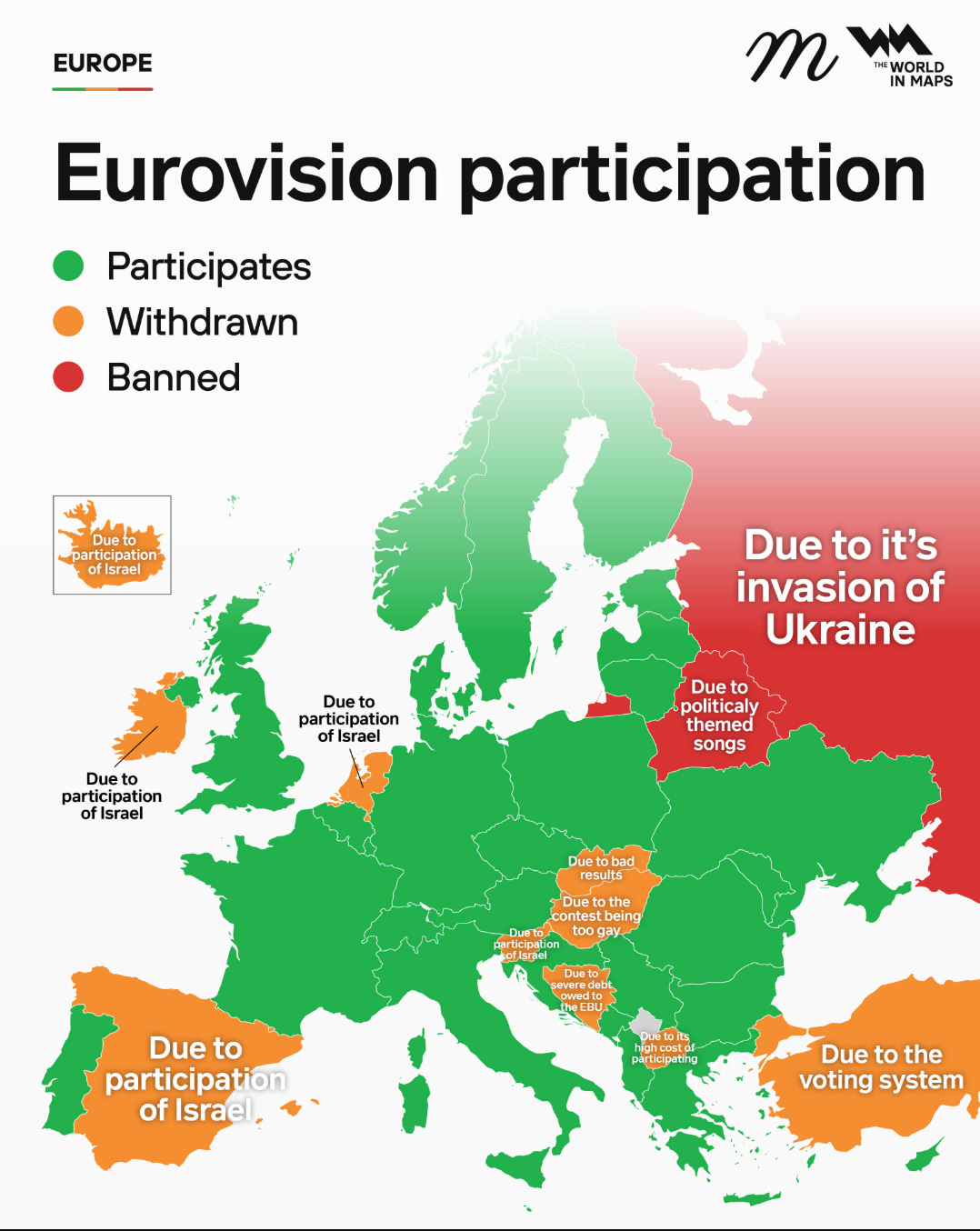
The competition — held at the Wiener Stadthalle and presented by Victoria Swarovski and Michael Ostrowski, following Austria's victory at last year's contest in Basel with JJ's Wasted Love — is being contested by just 35 nations, the lowest number since 2003. The figure reflects an unprecedented rupture within the European Broadcasting Union (EBU) over its decision to permit Israel to compete while the war in Gaza continues.
The public broadcasters of Ireland, Spain, the Netherlands, Iceland and Slovenia declined to participate after the EBU's winter general assembly in Geneva on 4 December last year, declining to put Israel's membership to a direct vote and instead adopting a package of rule reforms by 68 per cent of member votes. All five boycotting broadcasters announced their withdrawal within days of that decision. RTÉ of Ireland said participation "remains unconscionable given the appalling loss of lives in Gaza and the humanitarian crisis there". Spain's RTVE and Slovenia's RTV also chose not to air the contest at all, with Slovenia's broadcaster saying it was boycotting "on behalf of the 20,000 children who died in Gaza".
The withdrawal of Spain — one of Eurovision's "Big Five" major financial contributors — marks the first time that grouping has been incomplete since Italy rejoined it in 2011. Several media outlets have described the crisis as the worst in the contest's history. The boycott is the largest since 1970, though the overall entry count has fallen by only two from last year's 37, cushioned by the returns of Bulgaria, Moldova and Romania after short absences.
Germany, one of the Big Five that strongly backed Israel's inclusion, had previously indicated it would consider withdrawing were Israel excluded. Austria, the host broadcaster, was also supportive of Israel's continued involvement.
The roots of this year's tension lie partly in events at the 2025 contest in Basel. Yuval Raphael, Israel's representative, finished second overall but topped the global public vote by a considerable margin — a result that prompted several broadcasters to demand an independent audit. It subsequently emerged that the Israeli government had run a large-scale, multilingual advertising campaign urging viewers to cast the maximum 20 votes permitted per person. The Israel Government Advertising Agency's campaign for Raphael received more than 68 million total impressions, according to Eurovision News Spotlight, the EBU's own fact-checking and open-source intelligence initiative. The Israeli Ministry of Foreign Affairs had separately confirmed the existence of comparable campaigns during the 2024 contest.
In response, the EBU halved the maximum number of votes each viewer may cast, from 20 to 10; reintroduced national juries to the semi-finals for the first time since 2022; and banned campaigns for votes by third parties, including governments and government agencies.
The new rules did not prevent fresh controversy. On Saturday, Eurovision director Martin Green confirmed that a formal written warning had been issued to Kan, the Israeli public broadcaster, after videos appeared on behalf of this year's Israeli representative, Noam Bettan, instructing viewers to "vote 10 times for Israel". Mr Green said the EBU was "satisfied" the material did not constitute a large-scale, government-funded campaign but that the direct call to action was "not in line with our rules nor the spirit of the competition". He added that the activity identified could not affect the overall result.
Israel qualified for the grand final on Tuesday evening alongside nine other countries from the first semi-final: Moldova, Sweden, Greece, Belgium, Finland, Serbia, Croatia, Lithuania and Poland. Results were announced in random order; the precise ranking will not be disclosed until after Saturday's final.
During Bettan's performance of Michelle, a voice was clearly audible on the live broadcast, repeatedly shouting, "Stop, stop the genocide", throughout his introduction and opening verse. Austrian police had been on high alert before the evening; a pro-Palestinian demonstration outside the venue had been expected to draw approximately 500 people but in the event attracted around 30, according to Reuters. Further protests are anticipated ahead of Thursday's second semi-final and Saturday's grand final. (Irish Times; Reuters)
Bettan, 28, was born in Ra'anana, Israel, to a family from Grenoble, France, and is fluent in Hebrew, French and English — all three languages feature in Michelle, an upbeat song about breaking free from a toxic relationship co-written with Yuval Raphael, Nadav Aharoni and Tzlil Klifi. He was selected to represent Israel after winning the televised talent competition HaKokhav HaBa in January this year. He has been candid about his preparation for the reception awaiting him in Vienna. "I'm surrounded by an incredible team who make sure to shout boos at me during rehearsals, so I'm prepared for it," he told The Times of Israel. Finland's duo Linda Lampenius and Pete Parkkonen are currently the bookmakers' favourites to win Saturday's grand final.
Amnesty International has called on the EBU to suspend Israel from the contest, accusing it of "betraying humanity" and of applying double standards compared with Russia's suspension following its invasion of Ukraine in 2022. The EBU maintains that its neutrality rules govern national broadcasters, not governments, and that the legal and procedural grounds applied in Russia's case have no direct parallel here.
The second semi-final takes place on Thursday 14 May. The grand final is on Saturday 16 May.