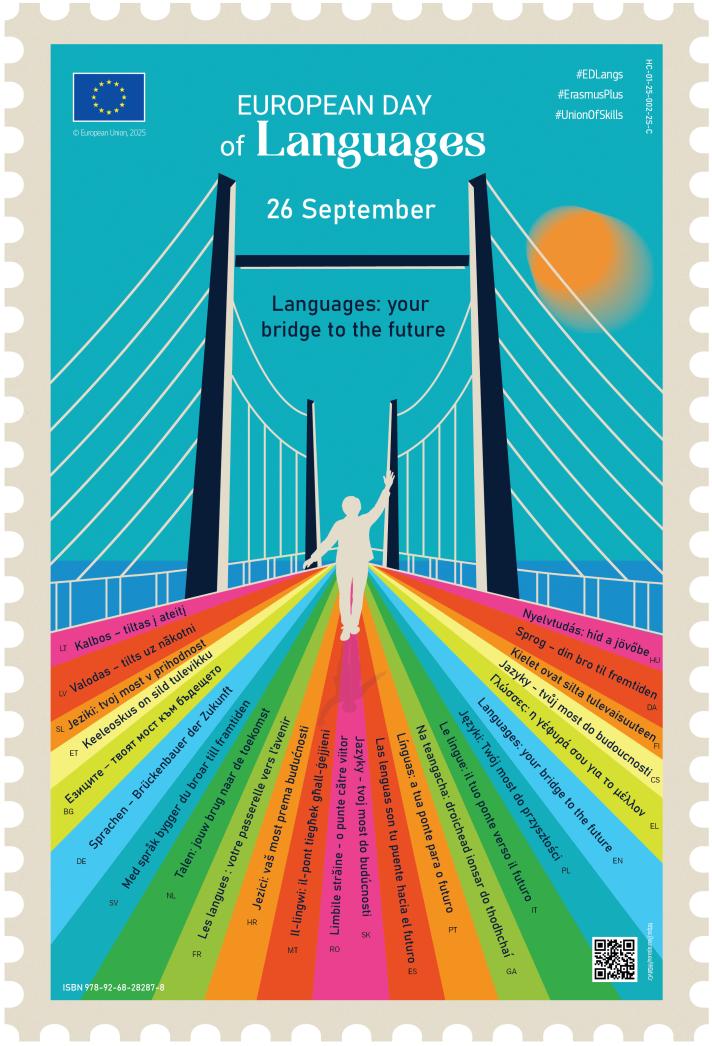

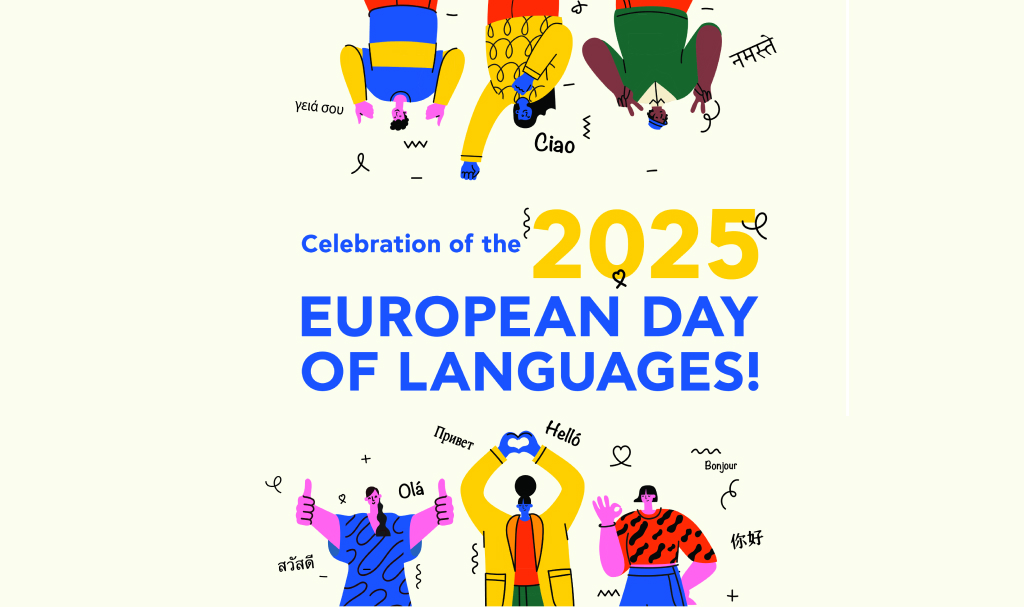
On September 26th, 2025, Europe marks the annual European Day of Languages (EDL), a widespread celebration dedicated to promoting diversity, cultural understanding, and lifelong language learning. This year marks a quarter-century commitment to fostering multilingualism and open-mindedness across the continent.
By Creatives Unite NewsroomEurope's linguistic landscape is remarkably diverse, with approximately 225 indigenous languages, representing roughly 3% of the world's total languages. The European Union recognises 24 official languages: Bulgarian, Croatian, Czech, Danish, Dutch, English, Estonian, Finnish, French, German, Greek, Hungarian, Irish, Italian, Latvian, Lithuanian, Maltese, Polish, Portuguese, Romanian, Slovak, Slovenian, Spanish, and Swedish. Beyond these official languages, Europe hosts more than 60 regional and minority languages, plus numerous languages brought by migrant communities.
The European Day of Languages was launched by the Council of Europe in 2001, following the European Year of Languages success. Its mission has been to underscore the rich tapestry of over 225 indigenous languages spoken in Europe, alongside official EU languages and numerous minority and migrant languages. The day serves to mobilise educational institutions, cultural organisations, and language enthusiasts to appreciate and engage with Europe's vast linguistic heritage.
A 2012 Eurobarometer survey shows that the majority of Europeans (54 %) are able to hold a conversation in at least one additional language, a quarter (25 %) are able to speak at least two additional languages and one in ten (10 %) are conversant in at least three. The five most widely spoken foreign languages remain English (38 %), French (12 %), and German (11 %), followed by Spanish (7 %) and Russian (5 %). Two thirds of Europeans (67 %) find that English is the most useful foreign language, followed by German (17 %), French (16 %), Spanish (14 %) and Chinese (6 %). The majority of Europeans do not describe themselves as active learners of languages. Around a quarter (23 %) have never learnt a second language, while over four out of ten (44 %) have not learnt a language recently and do not intend to start.
Research shows that language learning offers numerous benefits, including enhanced job opportunities, improved cultural understanding, increased brain flexibility, and stronger social skills. Unlike many European initiatives, the European Day of Languages operates through a decentralised approach.
This year's theme, “Languages open hearts and minds!” captures the empowering role of languages in connecting people, supporting empathy, and opening new intellectual and cultural horizons. Special projects include the creation of a multilingual anthem called “Voices of Europe,” poster competitions, and video collaborations that showcase the beauty and power of language learning.
This decentralised celebration is co-organized by the Council of Europe, the European Commission, national authorities, and a network of cultural organisations, supported by educational and diplomatic institutions. This flexible structure has enabled the celebration to adapt to local needs and preferences while maintaining its core mission of promoting linguistic diversity.
September 26:
• Virtual events organised by the European Commission include panel discussions with language experts, career talks in translation and language technology, and interactive sessions to inspire language learning. (Online, registration required)
• On the 27th, in Athens, Greece, a major multilingual festival at Pedion tou Areos organised by 14 embassies of the European Union National Institutes for Culture EUNIC focuses on democracy and citizenship. It targets families and children with workshops, storytelling, and art projects that emphasise democratic values.
September 1–30:
• Month-long participation in language-related activities across Europe: mini language courses, quizzes, book fairs, speak dating, language cafés, and escape games. European cities such as Venice, Vienna, Bratislava, Riga, and Zagreb are hosting language fairs, quizzes, and interactive sessions.
Ongoing until October 15:
• Poster design contest for the 25th anniversary theme, with prizes and exhibition at the European Centre for Modern Languages.
• Collection of multilingual anthem videos from schools and language enthusiasts.
• Schools throughout Europe are encouraged to participate in engaging activities such as multilingual breakfasts, creative workshops, and film screenings, all aimed at fostering enthusiasm for languages beyond English.
• You can find a full list of events here