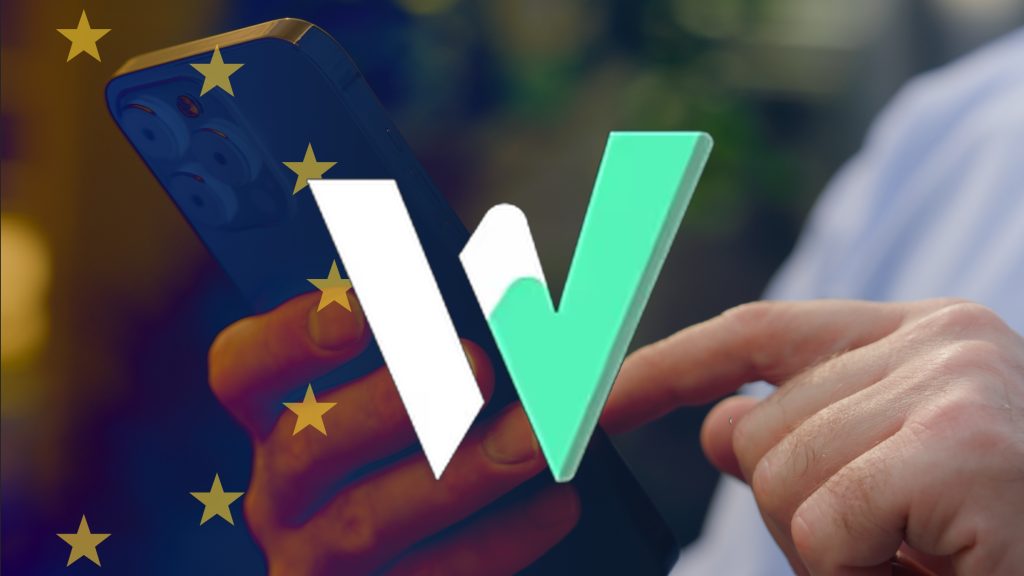


All three institutions of the European Union have joined W, a Swedish social network positioning itself as a European alternative to Elon Musk's X, as the European Commission opened an official account and invited followers to join a platform that its own spokespersons acknowledge Brussels neither owns nor funds.
European Commission President Ursula von der Leyen, European Council President António Costa and European Central Bank President Christine Lagarde were among the invitees at W's Brussels public launch on 17 June, held at the Press Club Brussels. The Commission's communications team posted on Facebook the same day, describing W as "a new independent social media network" and encouraging followers to register. The post marked the most visible sign yet of EU institutional machinery directing citizens to a platform built and owned entirely by private interests.
W Social AB is a start-up incorporated in Sweden, led by chief executive Anna Zeiter – a Swiss privacy expert and former chief privacy officer at eBay – who unveiled the project at the World Economic Forum in Davos in January.
The company is legally a subsidiary of We Don't Have Time, a Sweden-based climate media company that holds a 25 per cent stake. More than 750 investors from fifteen countries, including Britain, France and Switzerland, have backed the platform. Its technical team is based in Ukraine.
The platform runs on the AT Protocol, the same open standard that underpins Bluesky, meaning W users can follow and interact with Bluesky accounts across the two services. Its core distinguishing feature is mandatory identity Verification: Every account must be confirmed as belonging to a real human through a third-party process, Zeiter says, without that data being stored on W's own servers. "Social media is coming from other countries outside of Europe," she told the Brussels launch. "We are giving away the revenue. We are giving away our data. We are giving away our attention."
The public beta opened by invitation on 17 June, following a closed-testing phase that began in February. A full public launch is expected before the end of the year.
The Commission's decision to promote W has drawn criticism from digital rights advocates who argue it is inappropriate for a public institution to direct citizens towards a private, for-profit company. A sharper concern, first reported by the Italian filmmaker and digital rights commentator Elena Rossini on the day of the launch, centres on a development that postdates W's original announcement: the platform quietly deleted its public code repository from GitHub, the principal hosting site for open-source software, apparently in March, without announcement or redirect. Rossini found, using the Internet Archive, that the repository had existed as recently as 9 March. The European Commission has consequently migrated from Bluesky — which is open-source — to what now appears to be a closed-source platform.
On 3 June — nine days before the institutional accounts were moved from Bluesky to W Social's servers — the Commission published its Tech Sovereignty Package, which explicitly committed Brussels to "strengthening digital autonomy through open source. " Aral Balkan, co-founder of the Small Technology Foundation, told Rossini that the deletion of W's repository without a redirect was "highly unusual" and "very concerning".
"We don't need more European surveillance capitalists and people farmers. We need ethical alternatives working for the common good," Balkan said.
Critics have also pointed to the existence of Eurosky, an alternative AT Protocol social network run by the non-profit Modal Foundation that publishes its entire development roadmap openly. None of the major EU institutional accounts appears to have been redirected there.
A Commission spokesperson confirmed to Euronews' fact-checking team in January that "the EU is not launching or funding any social media platform" called W. The confusion arose in part because We Don't Have Time, W's largest single shareholder, received European Commission money for climate communication work for the Global Covenant of Mayors and the Commission's Directorate-General for Energy, related to the COP30 climate conference; both the company and the Commission confirmed that funding had no connection to W.
The backdrop is an accelerating deterioration in relations between Brussels and the American technology sector. X was fined €120 million by the EU under the Digital Services Act for breaching transparency rules, and Musk has since called publicly for EU regulatory bodies to be dismantled. In January, 54 members of the European Parliament wrote to von der Leyen, urging the Commission to support European platform alternatives; the letter carried no legal force and has produced no formal policy response.
Whether W can build a durable audience beyond politically motivated early adopters remains the central question.