
Henna Virkkunen, the European Commission's executive vice-president for technological sovereignty, security and democracy, co-hosted a high-level ministerial closing event in Brussels marking the political culmination of the Twin it! Part II campaign — a pan-European drive to create and share high-quality three-dimensional digital models of the continent's cultural heritage.
Vasiliki Kassiandou, Cyprus's Deputy Minister of Culture, joined Virkkunen on the podium on behalf of the Cypriot Presidency of the Council of the EU, which currently holds the rotating chair of the bloc. The event, held on 12 May 2026, was organised by the Europeana Foundation – the EU's central cultural heritage digitisation initiative – together with the Commission and was attended by invitation only.
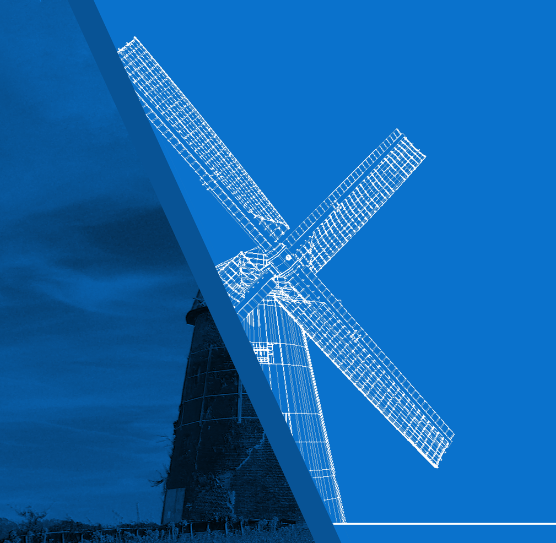
The occasion marked the closing of the second phase of a campaign first launched in June 2023. Under that original initiative — Twin it! 3D for Europe's Culture — the 27 ministries of culture across EU member states were each invited to nominate a single 3D-digitised heritage asset for submission to the common European data space for cultural heritage. The result was a collection of 37 high-quality 3D models — buildings, sites and objects drawn from across the bloc, ranging from Greece's archaeological site of Delphi to Latvia's Freedom Monument in Rīga — now publicly accessible via Europeana.
The second phase, running from June 2025 to June 2026 and conducted under the Polish, Danish and Cypriot Council Presidencies, advances that work with a sharper focus not merely on digitisation itself but on the reuse of those assets – in education, tourism, extended reality experiences, research and creative industries.
Speaking at the event, Vice-President Virkkunen framed the exercise as something greater than a technical archiving project. "Digitisation means preserving, protecting and sharing our cultural heritage," she said. "Artificial intelligence and open data innovation can fuel creativity and curiosity across sectors – from education to tourism and entertainment."
The remark underlines a broader Commission ambition: that Europe's stock of digitised heritage assets should become not a static archive but a living resource, interoperable across borders and freely available for reuse by scholars, developers and creative professionals alike.
In January 2026, the European Commission and the Europeana Foundation published the Common European Data Space for Cultural Heritage — Strategy 2025–2030, a strategic document setting out a shared long-term vision for how Europe's cultural data infrastructure should evolve. The strategy explicitly positions the data space within the Commission's broader priorities on artificial intelligence, data policy and digital transformation.
At its core, the document targets what it describes as a "trusted, interoperable and inclusive data space" — one designed to widen access to heritage data, increase its practical reuse, and keep pace with rapidly shifting technologies, including AI, three-dimensional scanning and extended reality. It identifies persistent challenges including institutional funding gaps, low prioritisation of digital transformation in some Member States, and data silos that impede cross-border collaboration.
The Commission's earlier recommendation of 2021 on a common European data space for cultural heritage had already set an ambitious benchmark: Member States should digitise in 3D all monuments and sites at risk of degradation by 2030, and half of those most visited by tourists.
The last ministerial gathering is the first in a series of closing activities for the Twin it! Part II campaign. A two-day hackathon — Hackit!4EU — is scheduled for 27–28 May 2026 at the Cyprus University of Technology in Limassol, where developers, educators, researchers and heritage professionals will be challenged to build innovative applications using the 3D models collected during the campaign.
The ambition is clear: a continent's worth of scanned stone, bronze and timber should not merely be preserved in digital amber but put actively to work.