



Europe’s cultural sector is being asked to do two things at once: slash its emissions and help citizens imagine a different way of living. A new EU OMC report argues that without culture, the green transition will stall—but warns that the sector itself is not yet ready. From the green rooftops on Valletta’s Design Cluster of heritage buildings (Malta) to a car-sharing campaign enabling transportation for the Electric Castle Festival (Romania), the Commission’s new report showcases the critical role of the CCS towards a just, inclusive and equitable green transition.
By Matthaios Tsimitakis, Eirini Polydorou
When European policymakers talk about climate action, they usually mean power plants, transport systems or industrial supply chains. But a new EU expert report makes a different claim: that Europe will not reach its climate goals without theatres, museums, festivals, designers, and artists changing how they work.
“The climate and sustainability transformation is essentially a cultural transformation,” the report states, arguing that decarbonisation will fail if it is treated as a purely technical exercise rather than a shift in values, habits, and imagination. “Creative shifts: empowering culture for sustainable living” arrives instantly when EU climate policy is moving from target-setting to implementation—and when public buy-in is increasingly fragile.
This new report is the result of the work on the ‘Green transition of the cultural and creative sectors’, carried out by the Open Method of Coordination (OMC) group of EU Member State experts during 2024 and 2025, as part of the EU Work Plan for Culture 2023–2026.
Two drivers stand out. Mobility: touring artists, international exhibitions and festival audiences are one of the EU’s highest-emitting sectors. And then there is digitalisation: streaming, online cultural consumption and cloud-based production increasingly rely on energy-intensive data centres.
As the report notes, culture is “among the reasons to use transportation” and an often-overlooked contributor to the growing carbon footprint of digital services. In response, across Europe, theatres are switching to LED lighting and rethinking touring schedules; museums are experimenting with lower-energy climate control systems; festivals are redesigning stages to reuse sets rather than build new ones for every production etc.
The report highlights inspiring greening practices from the cultural and creative sectors. It brings together culture and environment experts from EU countries and collects direct insight from public, private, and civil society organisations across CCS, including performing arts, music, libraries and museums, festivals, and the visual arts.
Storytelling, imagination, and behavioural influence position the CCS as drivers for positive systemic change towards a more sustainable world. If supported, culture, creativity, and the arts may have a critical role in enabling the necessary shifts in mentality and consumption habits. They also kind of have to do so, as emerging assessments of the CCS’ ecological footprint underscore the urgency for the CCS to adopt stronger environmental practices.
Energy efficiency pioneers: Teatro Real and Valetta Design Cluster
Responding to such challenges, Teatro Real is the first cultural heritage site in Spain listed in the national Energy Savings Certificate Registry. Since 2020, it has launched a broad energy optimisation programme, including rooftop solar panels, LED lighting, smart air conditioning, energy monitoring and certified green electricity.
With 2.198 solar panels installed across its 4.000 m² rooftop, generating energy savings of 963.159 kWh annually, Teatro Real managed to avoid 263 tonnes of CO₂ emissions in 2025.
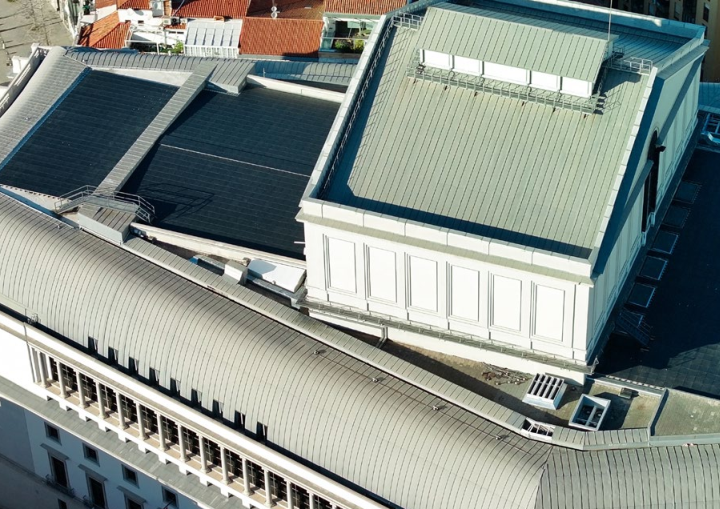
The example of Teatro Real offers a highly transferable model, especially for institutions with significant roof space and a comprehensive, transparent approach on how large-scale green upgrades can be implemented in historic buildings.
In Malta, the Valletta Design Cluster integrates sustainability into a restored heritage building. It employs innovative practices to reduce energy use and promote ecological balance in an urban context, such as a green roof with native plants for insulation and biodiversity. Other elements include rainwater harvesting via restored cisterns for irrigation and a retractable glass canopy with photovoltaic cells for natural light and renewable energy.
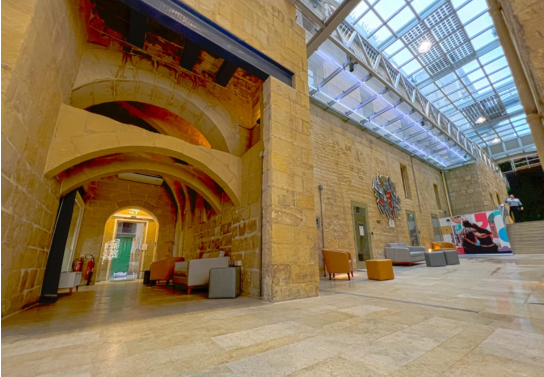
The case of Valletta Design Cluster demonstrates how blending green infrastructure with cultural and community functions enables heritage buildings meet modern environmental standards.
Car sharing by Electric Castle Festival, Romania
In 2024, the Electric Castle Festival launched a car-sharing campaign, including offers and incentives such as prizes and free parking for fully occupied vehicles. The organisers also provided non-stop buses and special trains to offer transport alternatives to individual cars, thus supporting sustainable travel.
Resulting in 6,000 fully occupied cars and 30,000 attendees, the initiative significantly reduced individual car usage and emissions.
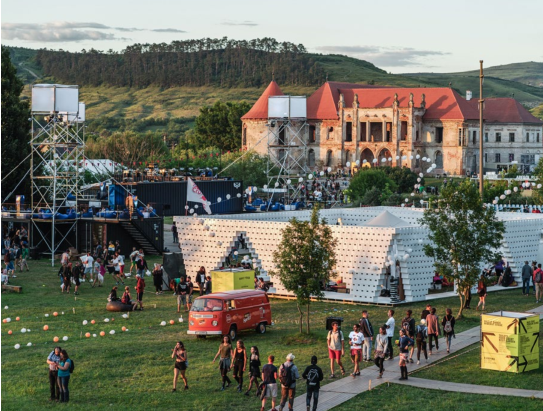
The example of the Electric Castle Festival provides a replicable model for climate-conscious audience travel and sustainable event management by showing ways for large-scale events to reduce transport emissions, such as by creative incentives and integrated mobility planning.
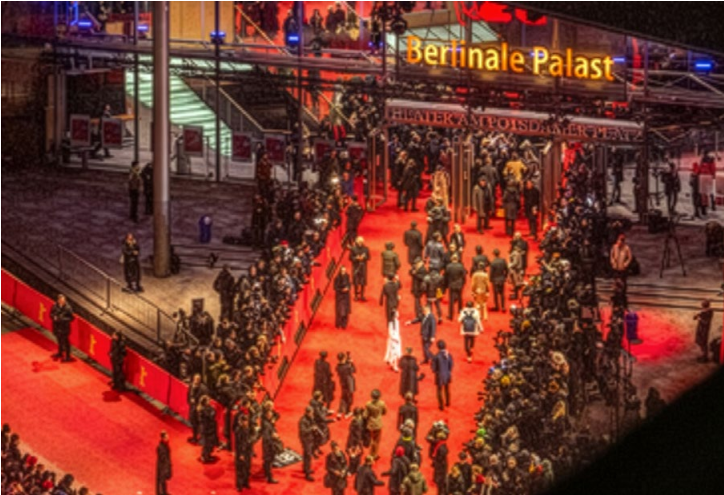
Climate-conscious leadership by Berlinale
The Berlinale festival, known for its sustainability efforts, uses upcycled and recycled materials in merchandising. Aiming to reduce waste, the festival prioritises circular design in its merchandising through the use of recycled, vegan and repurposed materials.
Combining environmental goals, fair labour and climate-friendly logistics, the festival demonstrates leadership in reducing environmental impact while promoting ethical production standards.
The Berlinale case offers a scalable model for festivals that wish to align cultural expression with climate-conscious aims and demonstrates ways for a high-profile cultural event to integrate sustainability into its core operations.
Italy pioneers with minimum environmental criteria for cultural events
In October 2022, Italy adopted a reform setting minimum criteria to reduce the environmental impact of publicly funded cultural events and festivals, as part of the country’s recovery and resilience plan under NextGenerationEU.
The criteria were developed with experts’ input from the EU-funded LIFE GreenFEST project and cover topics such as energy efficiency, circular material use and low-impact mobility, while also promoting social inclusion and accessibility.
The reform included monitoring safeguards, as the Sustainable Cultural Events Observatory (OESC) was created to support the implementation.
This initiative sets an example for green public procurement to be tailored specifically for the cultural sector.
Uneven Change
Across the EU, cultural and creative sectors (CCS) account for around 2% of gross value added, employ 7.8 million people, and, according to the latest figures, make up 6.3% of all businesses. Their environmental impact—estimated at 1–3% of total industrial impact—may seem modest compared with heavy industry, but it is rising too.
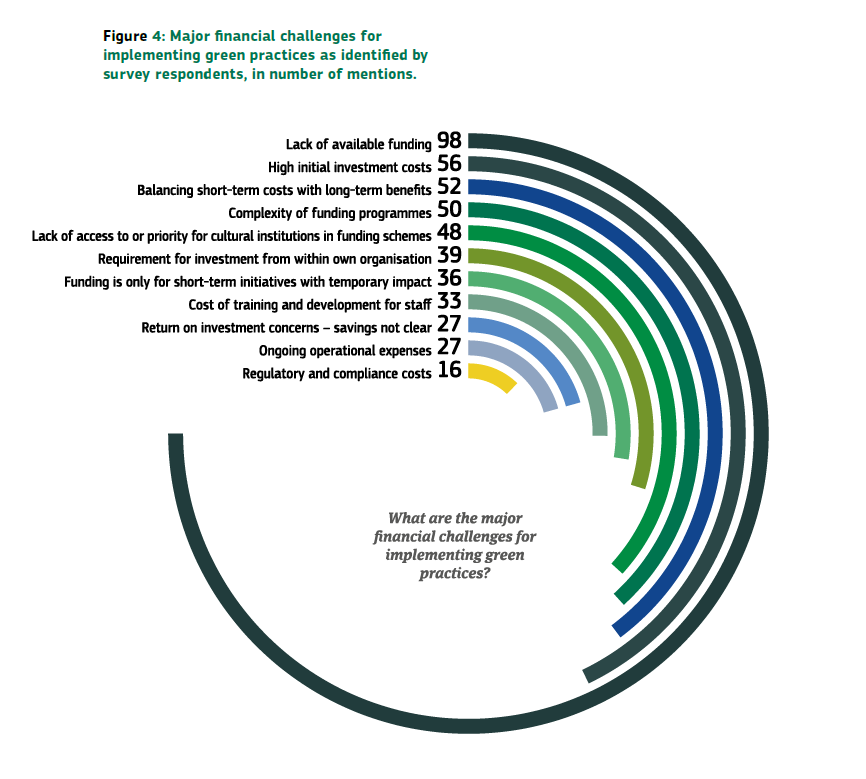
Nearly all cultural workers—over 96%—are employed in small and micro-enterprises, which often lack the capital to invest in greener infrastructure. In a survey, “lack of available funding” emerged by far as the single biggest barrier to action, followed by high upfront costs and complex funding rules. At the EU level, the report calls for a structural shift: culture should no longer sit on the margins of climate policy but be embedded into core frameworks such as the European Green Deal and the forthcoming Culture Compass for Europe.
Experts recommend appointing climate focal points inside culture ministries, integrating environmental criteria into cultural funding, and creating standardised carbon calculators tailored to different cultural subsectors. Large festivals and platforms, the report suggests, should eventually be required to measure and publish their carbon footprints, with the long-term aim of setting EU-wide emission ceilings. There is also a risk that eco-conditional funding could penalise smaller organisations unless accompanied by technical support. The report warns against “burdensome or inequitable outcomes” if sustainability rules are imposed without regard to scale and capacity.
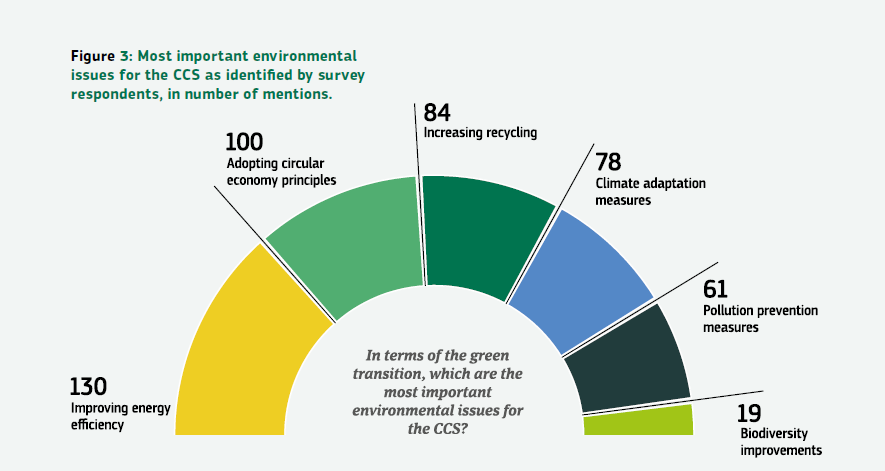
National policies and energy efficiency top CCS priorities for the green transition
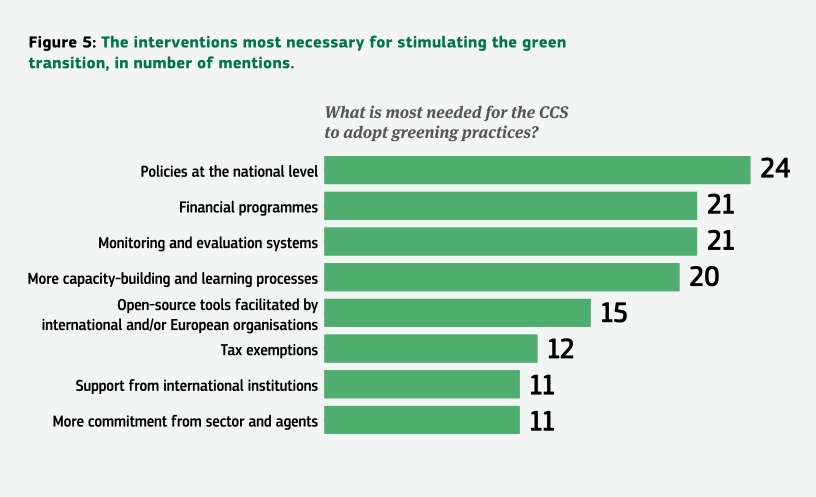
As national policies, financing, and monitoring are highlighted in the report as top enablers for improving CCS’ meaningful contribution to the sustainability agenda, the example of Italy stands highlighted.
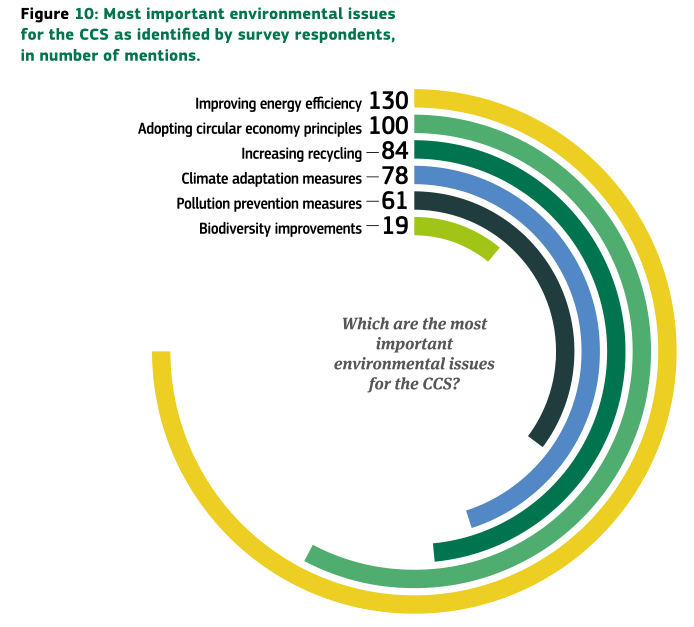
Energy efficiency and the circular economy are the CCS top priorities towards the green transition, said the respondents in the Commission’s report.
The reports gather insight from CCS organisations, practitioners, and policymakers, including public bodies, private sector enterprises, and civil society organisations. The top five subsectors represented were performing arts, music, libraries and museums, festivals, and the visual arts.
Their responses identify key factors for culture as a driver of change to engage, assess, transform, stimulate, amplify and advocate.
Find out more here
Images in this report: © Teatro Real, 2025,
Valletta Design Cluster: “© Valletta Cultural Agency, 2021-2024”
Electric Castle Festival: “© Electric Castle, 2017”
Berlinale Palast: “© Jan Windszus, Internationale Filmfestspiele Berlin, 2025”