


Gamescom, the world's largest video games fair, opened in Cologne on 26 August and runs until 30 August, preceded by the developer conference gamescom dev on 24 August and the Opening Night Live showcase on 25 August. Today, 27 August, brings the event's most symbolically loaded moment: Germany's president, Frank-Walter Steinmeier, opens the gamescom congress — a policy-focused conference running alongside the trade fair — with a speech and a panel discussion on the role of games in democracy. It is the first time a German head of state has attended gamescom at all.
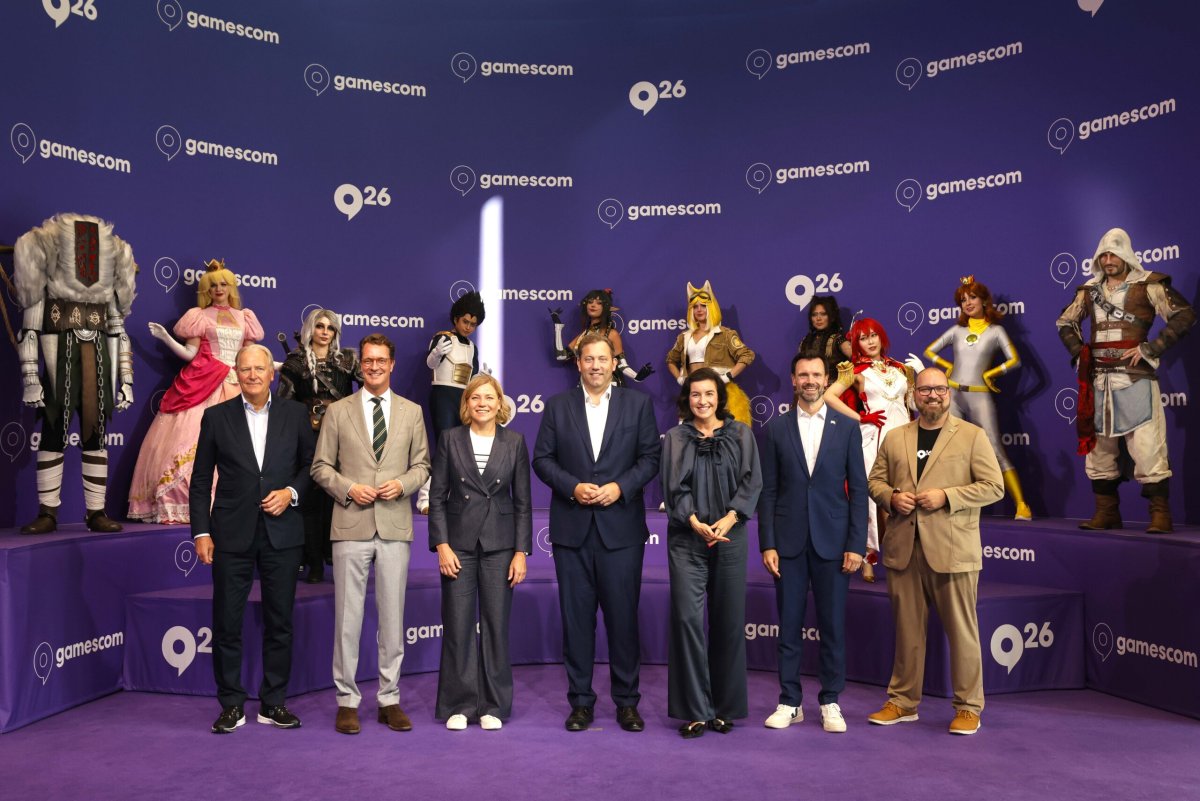
Steinmeier is not the only high-level visitor. Henna Virkkunen, the European Commission's executive vice-president for tech sovereignty, security and democracy and commissioner for digital and frontier technologies, took part in gamescom's political opening on 26 August — her first visit — alongside Germany's vice-chancellor and finance minister, Lars Klingbeil, its minister for research, technology and space, Dorothee Bär, and Hendrik Wüst, minister president of North Rhine-Westphalia. More than 600 politicians attended gamescom in total in 2025. "Europe is at the forefront of the gaming sector," Virkkunen said, pointing to the international popularity of European-made games and the industry's contribution of new technology to the wider economy.
She used the visit to set out the tools Brussels says back the sector: funding for video-game professionals through Creative Europe and InvestEU, and the proposed AgoraEU programme, alongside the EU's consumer- and child-protection rules. Vdeo games are now treated as a cultural and digital-economy priority in their own right, not merely entertainment.
The clearest expression of that is Creative Europe MEDIA, the EU's flagship audiovisual funding strand, which this year marks 35 years of supporting European film, television and games production. It backs narrative video games and interactive immersive works judged to have creative value, commercial potential and cross-border appeal. Alongside grants sits MediaInvest, the Commission's equity tool for the sector, which is targeting €400 million of investment between 2022 and 2027, drawn from Creative Europe MEDIA and the InvestEU fund and managed by the European Investment Fund. It has already backed venture funds specialising in European game studios.
AgoraEU, the programme Virkkunen name-checked, is still under negotiation between Parliament and the Council: proposed by the Commission in July 2025, it would fold Creative Europe into a single €8.6 billion fund running from 2028 to 2034. Its media strand, provisionally called MEDIA+, is drafted to name video games explicitly among the industries it exists to support, alongside audiovisual production and journalism.
Games also sit within the Commission's long-running Media and Audiovisual Action Plan, first adopted in December 2020, which explicitly groups video games with cinema, television and virtual reality as part of the audiovisual entertainment sector the Commission is seeking to keep competitive and technologically autonomous.
Regulation is the other side of the ledger. Games platforms fall under the Digital Services Act, EU consumer and data-protection law, and, where artificial intelligence is used in game design or moderation, the AI Act. Protecting children online — age assurance, addictive design, harmful content — has become a growing preoccupation for Brussels, which has been developing a European digital age-verification tool as part of wider child-safety measures.
That regulatory appetite has already collided with the industry once this year, in a dispute gamescom will not let Virkkunen avoid. The citizens' initiative "Stop Killing Games" — the 14th such initiative to reach the Commission — gathered 1,294,188 verified signatures from across the EU, clearing the required thresholds in 24 member states, and was formally submitted to the Commission on 26 January 2026. Its organisers met Virkkunen and Michael McGrath, the commissioner for democracy, justice and consumer protection, that February to press their case: that publishers should be legally required to keep games playable after they switch off the servers many titles depend on.
The European Parliament debated the initiative in plenary on 21 May, and the Commission adopted its formal reply on 16 June. It concluded that a binding obligation to keep games playable "would not be proportionate", citing rights-holders' intellectual property and pointing to an industry survey showing 26 per cent of European game developers had lost their jobs in the previous twelve months. Instead, it committed to opening talks with publishers and consumer groups by the end of 2026 on a voluntary code of conduct for games' "end of life", to publishing its own report by the end of 2026 on how the EU's Digital Content Directive applies to discontinued digital content and services, and to continuing to work with consumer authorities on public awareness.
In reaching that conclusion, it noted that industry bodies had warned a binding obligation could create cybersecurity risks and disrupt existing business models, while the European Consumer Organisation, BEUC, argued that most affected players want continued access to games they have already paid for, rather than compensation